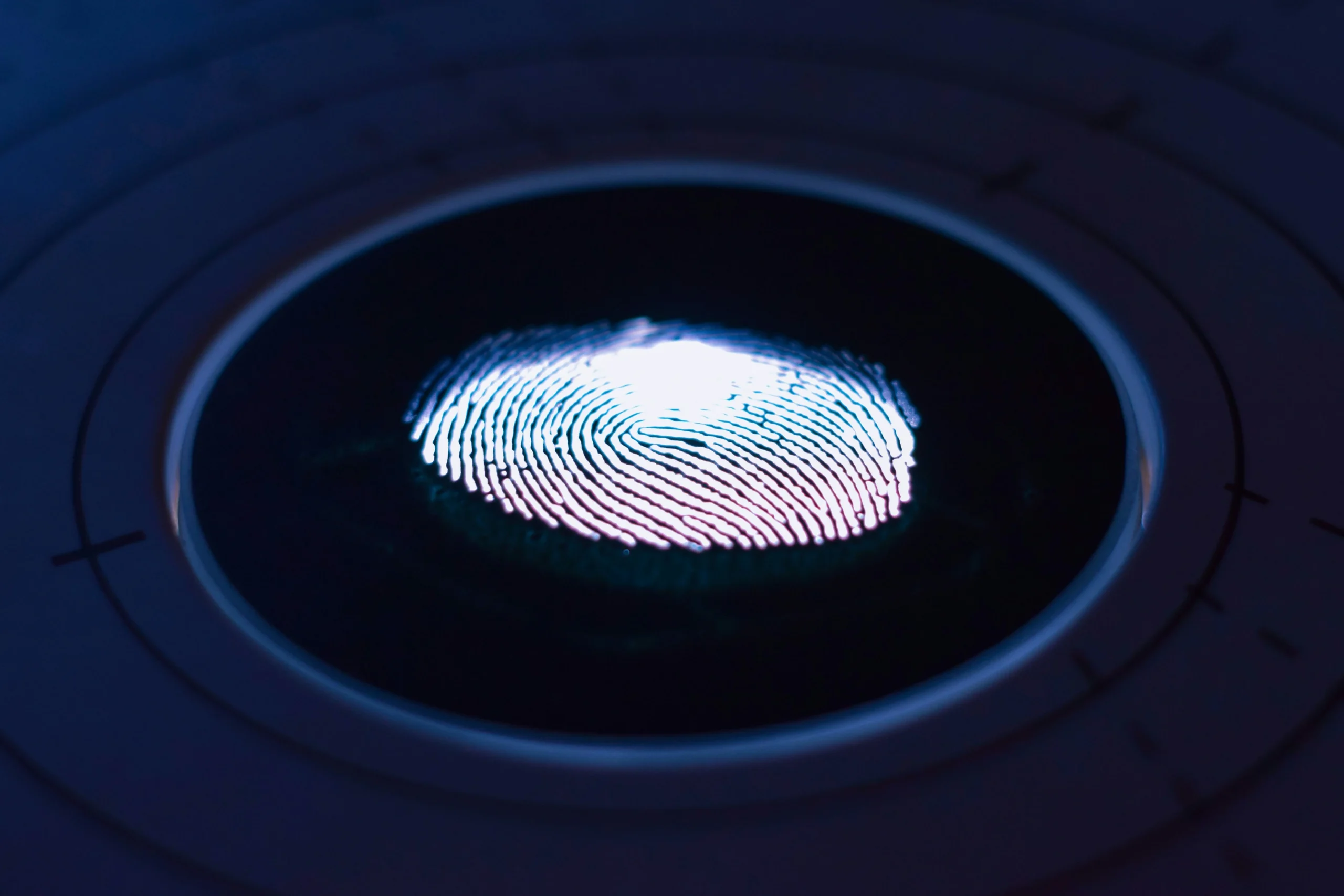
As businesses look for more accurate ways to track labor, the time clock itself becomes a strategic decision. A biometric time clock helps verify not just when an employee clocks in, but who actually recorded the punch, making it a strong option for organizations focused on accuracy and fraud prevention.
While a biometric time and attendance system prevents many of the issues that come with traditional time-tracking methods, it doesn’t mean it’s the right option for every workplace. Let’s take a closer look at how biometric systems work and how they compare to other methods for clocking time, such as PINs or employee badges.
What is a Biometric Time Clock?
A biometric time clock captures punches using an employee’s unique physical characteristics to verify their identity. This can include a fingerprint, facial recognition, or other biometric identifier. Unlike PINs or badges, biometric identifiers cannot be shared, which eliminates buddy punching and other forms of time clock fraud.
Aside from the method of collecting punches, biometric time clocks operate similarly to other systems. The time clock connects to your time and attendance software and records punches just like any other method of collecting them.
How Biometric Time Clocks Compare to Other Methods
Biometric, PIN, and badge-based time clock systems all record when employees start and end their shift, but they differ in setup, costs, and ongoing management.
| Method | Biometric | PIN Code | Employee Badge |
| Best Suited For | Businesses that require high accuracy | Businesses with smaller staff, where accuracy can be easily verified | Mid-size to large businesses; organizations already using ID badges |
| Cost | Potentially higher upfront costs for terminals and software setup; Lower ongoing costs than badge printing | Typically lower upfront and ongoing costs due to simpler setup for terminals and software` | Moderate to high cost for terminal setup, issuing credentials, and reprinting lost badges |
| Setup & Administration | Requires terminal installation, employee enrollment, and software setup; Minimal ongoing upkeep | Typically simple process of setting up terminals and assigning PINs; Occasional PIN resetting | Requires setting up terminals, badge design, and printing badges regularly for new staff and lost credentials |
| Identity Verification Strength | High | Low | Moderate to low |
| Risk of Time Clock Fraud | Low: Biometric credentials are much harder to share than PINs or badges | High: PINs are easy to share | Moderate to low: Buddy punching requires having a physical badge |
How Do Biometric Time Clocks Protect Privacy?
While biometric time clocks serve an important function for businesses, it’s common for employees to ask what happens to their biometric data when it’s used to collect time punches. VIDIX’s biometric systems convert fingerprints into encrypted data templates used to verify an employee’s identity. The fingerprint image itself is not stored in the clock or the software.
Even though fingerprint or facial scans are not stored in the time clock or its software, businesses still need to understand the privacy and compliance requirements associated with biometric data. Laws differ by state, so it’s important for businesses to review applicable compliance requirements when implementing a biometric timekeeping system. This is especially true for businesses with locations in more than one jurisdiction.
Some states have dedicated biometric privacy laws, while others reference biometric data under broader consumer privacy laws. For example, the Biometric Information Privacy Act (BIPA) in Illinois, the Capture or Use of Biometric Identifier Act (CUBI) in Texas, and the Biometric Identifiers Law (RCW 19.375) in Washington exist specifically for biometric privacy.
When is a Biometric Time Clock the Best Choice?
Biometric time clocks can be useful for businesses of all sizes and types. Your business may want to consider a biometric system if:
- You’ve had ongoing issues with buddy punching or other forms of time theft that you haven’t been able to address with policy changes.
- Your business has a large hourly workforce and minor time discrepancies across your organization add up.
- You have significant labor costs and need to ensure highly accurate punches with credentials that can’t be shared.
- Your business already uses biometric access control, and you want the same level of security and accuracy for collecting punches.
- You need credentials that are more secure than PINs but don’t want to manage ongoing costs for employee badges.
When is a Traditional Time Clock a Better Choice?
Not all businesses face the same level of risk when it comes to collecting punches. In low-risk environments with smaller teams, a biometric system is often more powerful than a business actually needs. PINs or badges might be a better choice when:
- You have a smaller workforce, and it’s easy to verify accurate punches through other methods.
- You already use employee badges for identification purposes.
- Your business has a very simple timekeeping process.
- Your software doesn’t support an advanced time clock system.
Is It Time to Upgrade?
For some businesses, the reason for sticking with a traditional timekeeping method isn’t that it’s the best fit. It’s often because existing software doesn’t support a more complex system. If you’re using PINs or even paper-based time tracking simply because your HR or payroll software limits your options, you may want to consider upgrading to software that gives you the flexibility you need.
If your current system is limiting your options, VIDIX Labor gives you room to grow. It supports both badge-based and biometric time collection and integrates with hundreds of payroll plans. Contact our team to see which setup fits your workforce.
Choosing the Right Biometric Time Clock
Once you decide that biometric time verification is the right choice, the next question is which type of system best fits your timekeeping process. You’ll want to consider:
- How employees will clock in. Facial recognition and fingerprints are common options for collecting punches, but the right choice depends on how your employees work. Facial recognition is a touchless option for employees who wear gloves or work in high-traffic areas, while fingerprint scanners are a more practical choice for environments where employees can easily use a physical scanner and a touchless process is unnecessary.
- Your work environment. A basic biometric terminal is usually sufficient for an office or a clean, temperature-controlled warehouse. In areas with dust and debris or high traffic, a more rugged terminal is appropriate.
- Capacity and features. Some biometric terminals support thousands of fingerprint profiles, while others can store facial profiles, employee badge information, or other credentials. Be sure to choose a system with enough capacity and features for your current needs while still supporting growth.
VIDIX Labor has a few options for biometric time clock systems. The VX-ULTI line of terminals offers high capacity and performance with touchscreen displays and support for facial recognition, fingerprint scans, and RFID tags in addition to other methods for collecting punches.
Choosing the Right Time Clock for Your Business
The best time clock isn’t always the newest or most advanced option. For some businesses, traditional PIN-based systems or badges are ideal for collecting punches. For others, a biometric time clock provides the convenience and identity verification needed to reduce errors and simplify time punches.
If you’re ready to move beyond a basic timekeeping system, VIDIX Labor’s flexible VX-ULTI terminals combine all the features you need while integrating with your timekeeping and HR software. By accepting biometric punches, badge scans, or PINs, you have options that will grow with your business instead of holding you back. Contact our team at VIDIX Labor to learn how we can simplify your operations by bringing timekeeping, badge printing, scheduling, and payroll together in a unified solution.